

Kids involved with child protective services miss much more school than their peers
Over 1/3 of children in the US are impacted by a CPS investigation
|
Elizabeth Weinstein Ohio State News |
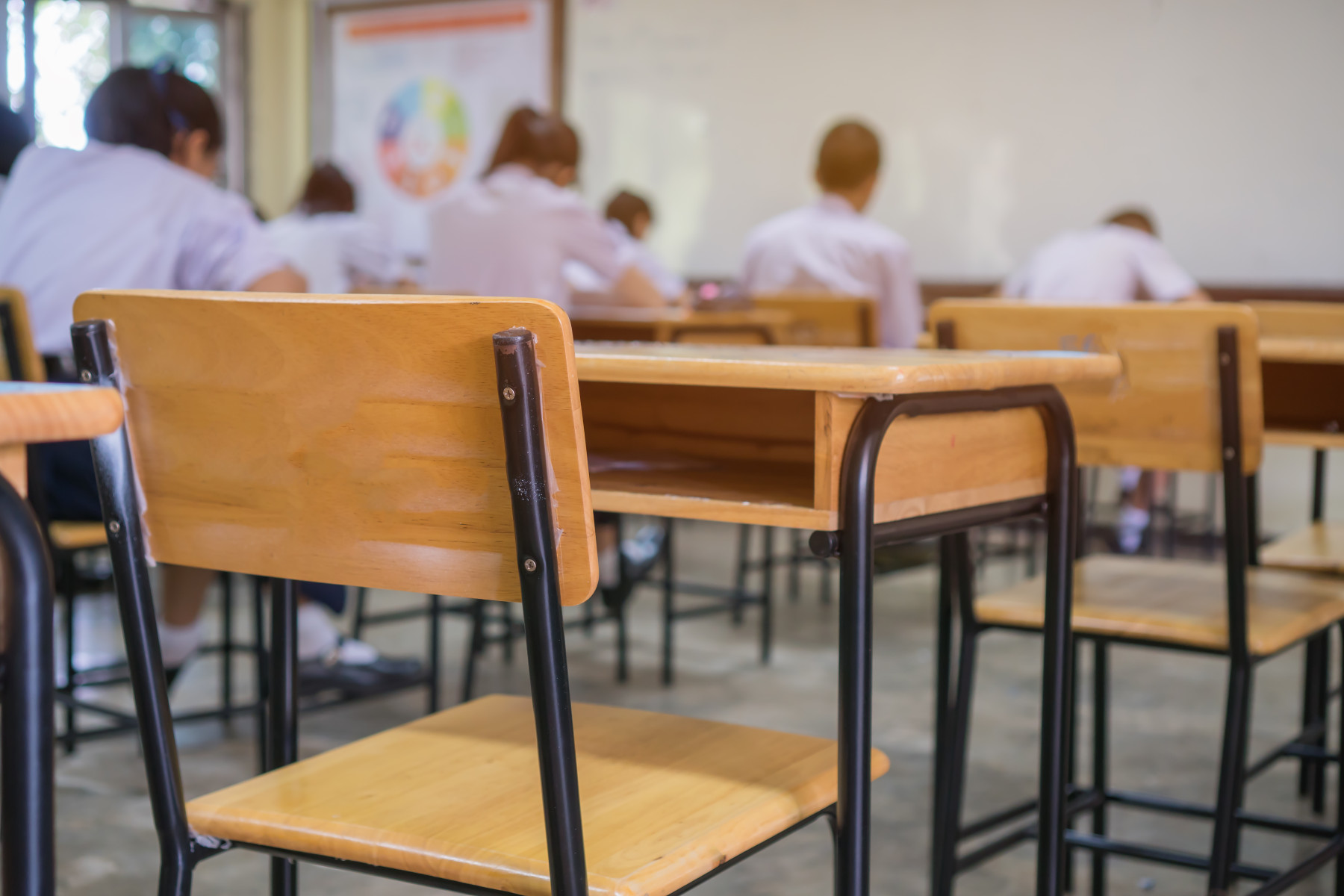
Across the country, kids are settling into new school year routines. Parents buy backpacks, teachers arrange desks and lesson plans, and friends reconnect. But in recent years, empty chairs are becoming a more common sight — especially in classrooms where students are already facing the most adversity.
When kids regularly miss school, it creates a ripple of consequences that negatively impact everything from grades and test scores to future education plans, career opportunities and economic mobility. Yet one group of especially vulnerable students has been largely overlooked in existing research on absenteeism: kids who have had contact with Child Protective Services (CPS).
New research from The Ohio State University, published in Children and Youth Services Review, found that students with CPS contact were more likely to be absent from school than their peers, for both excused and unexcused reasons. These students were also 14 percentage points more likely to have their teachers contact their families about attendance problems and reported feeling less connected to their schools than their classmates.
The research, led by Arya Ansari, an associate professor of human development and family science, used data from the Future of Families Child Wellbeing Study, which tracked 3,334 adolescents across 20 urban cities from birth through age 15. They examined responses from kids who have had CPS contact through the age of 15, relative to those who have not, including what their families reported about their attendance, and any feelings students expressed with respect to their school connectedness.
According to Ansari, many kids have contact with CPS at some point in their childhood. These investigations are prompted by concerns about children’s safety and well-being, with reasons including suspicion of potential abuse, neglect, substance abuse or domestic violence. In 2024, almost 3 million children were the subject of a CPS investigation. By the time they reach 18, over a third of children in the U.S. will likely be impacted by a CPS investigation, and that number is even higher for Black children — more than half of whom will have contact with CPS before turning 18.
Chronic absenteeism has always been an issue in U.S. schools. During the 2018-19 academic year, 15% of K-12 students were considered chronically absent, meaning they missed at least 10% of instructional time. The COVID-19 pandemic drove national rates of absenteeism up to 28% in 2021-22 before declining to 24% in 2024.
“Surprisingly, in the attendance or absenteeism literature, there’s been very little intersection with kids or families that have had contact with CPS,” said Ansari, also a faculty associate at the Crane Center for Early Childhood Research and Policy.
Contact with CPS itself can be a source of adversity, he explained. And families often respond to the increased surveillance in one of two ways: Some disengage, avoiding the system through even more school absence, while others become more diligent about getting their kids to school every day.
Ansari wanted to explore how schools could better compensate for some of the adversity kids in contact with CPS might be experiencing outside of school.
“Absenteeism reflects many challenges that children and youth experience. Our study suggests that youth with CPS contact face elevated risks,” he added. “But an important piece of that puzzle, as schools think about how to engage students and families, is their connection to school. This is important because school connectedness is malleable and modifiable.”
For example, he said, past studies have found that positive relationships with teachers, inclusive school climates and extracurricular activities all help kids feel safe, valued and connected to their school.
While school connectedness explained some of the attendance gap between kids with CPS contact and their peers, the study found that on its own, school connectedness doesn’t effectively reduce attendance gaps between youth with CPS contact and their peers who haven’t interacted with the system. In other words, while school connectedness interventions don’t necessarily benefit kids with CPS contact more than others, they benefit all children equally.
“School connectedness is one piece of the puzzle, but it ultimately can’t be the only answer to the adversity these kids face,” Ansari said. “It has to be one piece of a larger toolkit.” The toolkit, he explained, should also address issues like housing and income instability, food insecurity, and mental and physical health disparities that students and their families are navigating.
“Many families have to cut meals, and when kids come to school hungry, they’re less likely to be engaged. … If kids don’t have a school bus, they have to walk, and sometimes families don’t feel comfortable with that because of traffic safety or crime. There are a lot of issues at play, largely driven by poverty,” Ansari said.
For kids involved with CPS who are dealing with potential abuse and neglect in their homes, school can serve “as a resource and a getaway — a way out in terms of pursuing higher education and moving on to greater opportunities. But it cannot counteract all these other historical and ongoing forces happening at the same time,” he added.
While schools are often viewed primarily as academic institutions, the relationships between students, teachers and peers are essential to this toolkit. “The social-relational aspect of education is really important,” Ansari said. “We need to keep that in mind as we strategize around tackling absenteeism.”
The study was co-authored by Kierra M.P. Sattler from the University of North Carolina at Greensboro.
