

Ohio State collaborates with Colombian search agency
University contributes to effort to identify thousands of missing people

|
Franny Lazarus Ohio State News |
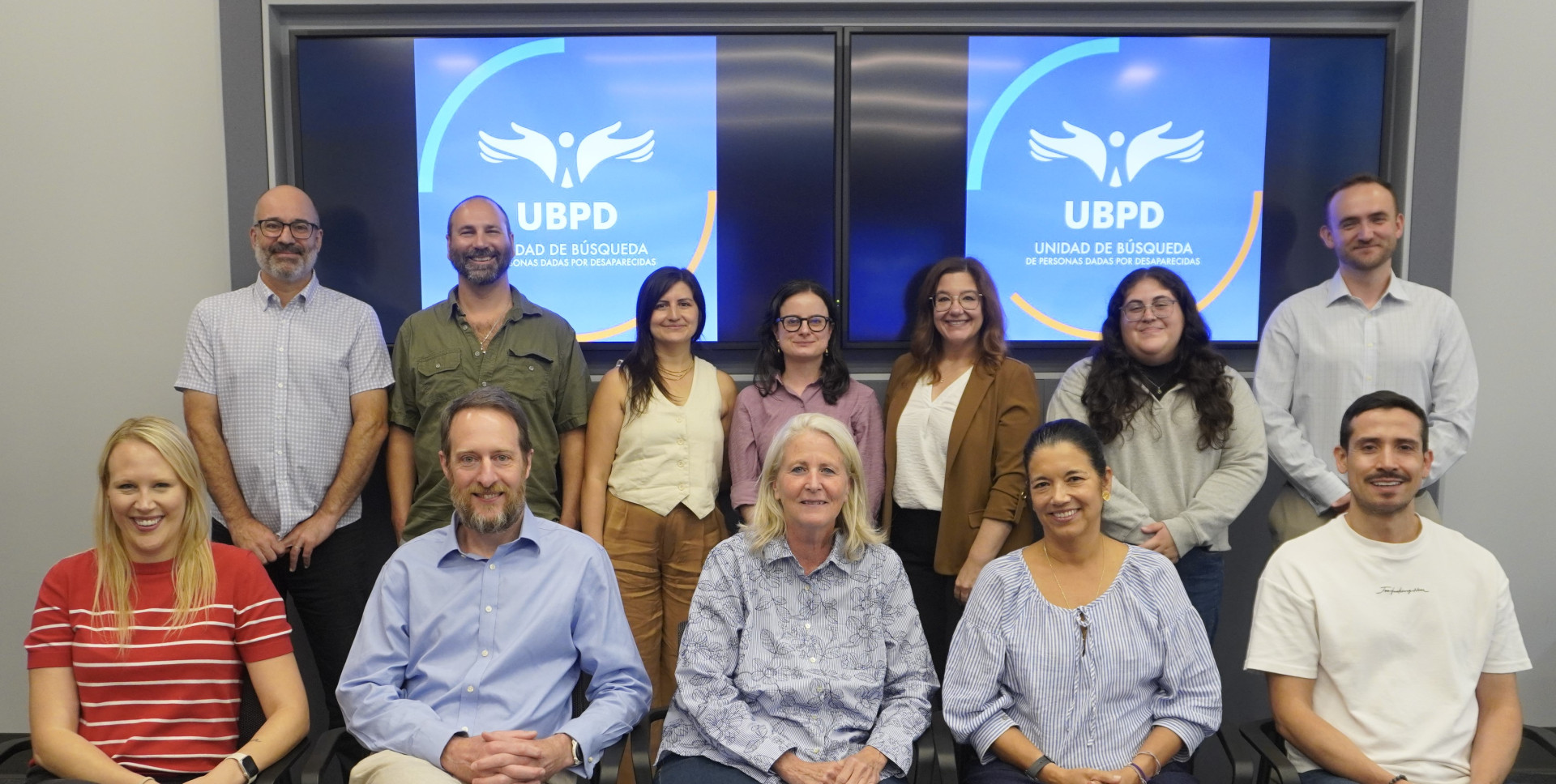
After more than six decades of conflict, 137,000 people have been reported missing in Colombia. A partnership between The Ohio State University’s new Mershon Search Lab and Colombia’s Unidad de Búsqueda de Personas dadas por Desaparecidas (UBPD) aims to identify the missing and bring closure to their families.
While attending an international convening about the Belfast/Good Friday Agreement, which brought an end to the 30 years of conflict in Northern Ireland known as the Troubles, lab co-director Teri Murphy met with a group from the UBPD.
Since the 1960s, Colombia has been ravaged by warring factions, criminal gangs and internal conflict. A strategy on all sides of these conflicts was to “disappear” people; many were killed and thrown into municipal dumps, wells, rivers and mass graves.
The Colombian and Northern Ireland delegates were keen to share their perspectives and learn from each other, Murphy said.
“I had the privilege of being able to sit in on those conversations and be part of that exchange,” she said. “And during our time together, [UBPD director] Dr. Luz Janeth Forero Martinez came up to me and said they were looking for a university partner and wondered if we might be interested.”
Two years later, in June of this year, the Mershon Search Lab was launched.
The lab brings together an interdisciplinary team with backgrounds in social psychology, forensic anthropology and archaeology, geography and sociology. Research topics range from geographic (What happens when dead bodies are thrown into rivers?) to psychological (How can search contribute to social healing?) to technical (How can data-driven approaches improve search efforts?).
“[At Ohio State], you’ve got brilliant minds, people with time and resources who focus on solving problems, but they’re often disconnected from the people who may need that support,” said Derek Congram, Mershon Search Lab’s co-director. “The people who need that support, if you think of Colombia, they’ve got more than 137,000 people that they’re investigating. Who among them has time for research? Research is a luxury for them.”
Ohio State is able to provide that research, Murphy said.
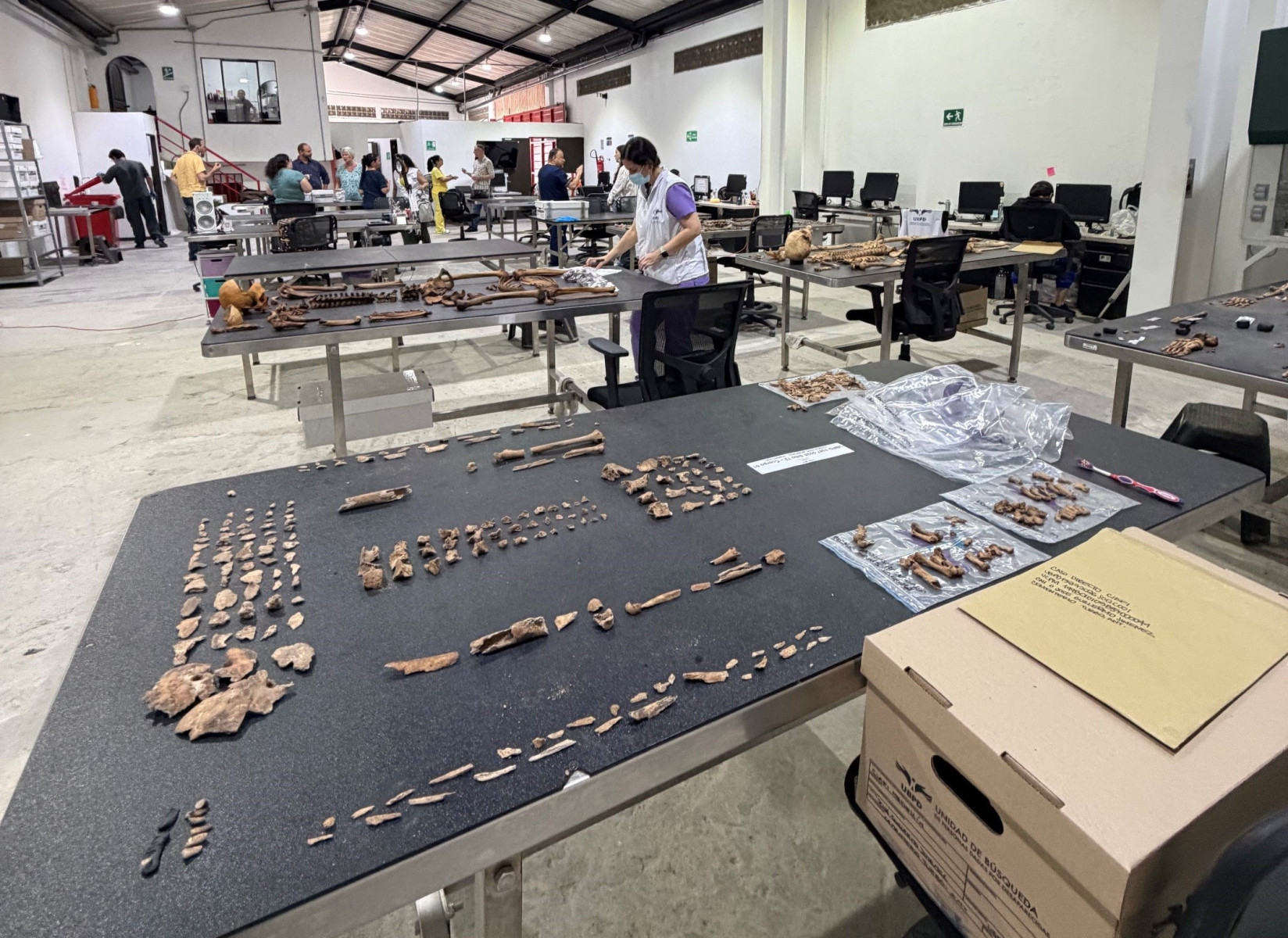
“If we can come alongside and say, ‘What are the problems you’re wrestling with? What do you need to learn more about? What can we unpack for you? What can we track for you?’” she said. “We are really supporting that work.”
“Writing is slow, publishing is slow,” Congram said. “It takes two years to publish something. Guess what: It’s a different Colombia in two years. So, we’re constantly assessing how we can be supportive in a way that’s actually useful to them.”
“On behalf of Colombia’s Unit for the Search of Missing Persons,” said Director Forero Martínez, “we extend our deepest gratitude to the Mershon Center at Ohio State University for the opportunity to continue advancing this search laboratory – this wonderful project we have built together.”
The benefits of the partnership flow in both directions. Colombia’s search process is considered the best and most coordinated approach in the world, Murphy said, providing a rare opportunity for the Mershon Search Lab team, graduates students included.
“These people, in Colombia, they’re experts,” Murphy said. “They’re forensic experts, they’re medical experts, they’re dental experts. They’re psychological experts. … We’re gaining access to real, live data in real time. It’s exposure for us; it’s exposure for the students.”
Given the at-times tense history between the United States and Colombia, Murphy stressed that humility is crucial to the partnership’s success.
“We’re not flying in with savior capes on. We don’t say we know what’s best for you,” she said. “We want to support the work, not get in the way of it.”
“Miles Davis said that what makes jazz great isn’t the notes you play but the notes you don’t play,” Congram said. “When I got to a new place, when I’ve been sent to help, the first thing I have to do is listen. Don’t tell people how you’re going to solve their problems.”
This attitude is foundational to the alliance with UBPD and is a core value of Mershon’s Search Lab, Murphy said.
“We’re a land-grant institution,” she said. “This pivot out of the ivory tower, to step out and make our knowledge available, to share it, to make it practical so it can be useful to the people who need it most, that’s embedded in the history of Ohio State. A real-world impact, not just knowledge for knowledge’s sake.”
The search lab team is driven in part by the desire to bring answers to families of the missing, Congram said. He finds their courage remarkable.
“These are the people who teach you as well,” he said. “When we talk about teaching and expertise, it’s not just the scientists and the academics, it’s also the families, it’s the community leaders, the people involved in all of this who teach you about what it is to be resilient and how you define what is right and what is wrong.”
Murphy’s motivator is “the fight against oblivion.”
“In Colombia, when individuals were taken, they were vanquished. Their history, their identity, their personhood was literally snuffed out,” she said. “Together with UBPD, our work is an act of remembering each person's humanity, to recognize their worth and to support a dignified return to their families and communities.”
