


Ohio State faculty, industry experts offer affordable housing solutions
Speaker series focuses on responding to local, national housing crisis

|
Chris Bournea Ohio State News |
Though affordable homes and rental units are in short supply in Columbus and many cities across the country, there are a number of strategies that can make housing more accessible, according to industry experts who shared insights during a speaker series presented this fall by The Ohio State University’s Center for Urban and Regional Analysis (CURA).
The series, “Responding to the Housing Crisis,” co-presented with the Mid-Ohio Regional Planning Commission (MORPC), featured Ohio State faculty and staff as well as local and national practitioners discussing housing and its impact on communities.
“CURA and MORPC share similar goals – we are both committed to building more sustainable communities in central Ohio,” said CURA Director and Professor Harvey Miller. “Our autumn webinar series on ‘Responding to the Housing Crisis’ is part of that commitment: We are highlighting voices that have valuable experiences and solutions for addressing the dire housing crisis we are facing in Columbus – and indeed the entire U.S.”
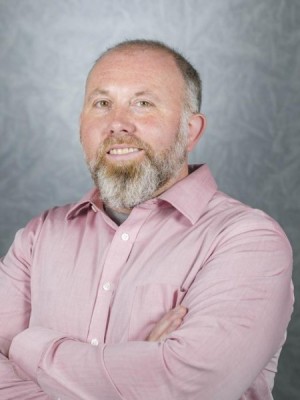 The series concluded with a Dec. 6 session addressing “The State of Housing in Central Ohio.” The panel discussion featured Jason Reece, Ohio State’s vice provost for urban research and community engagement; Carlie Boos, executive director, Affordable Housing Alliance of Central Ohio; Lark Mallory, founder, Mallory Economic Development Advisors; and Amy Riegel, executive director, Coalition on Homelessness and Housing in Ohio.
Not enough housing units are being built each year to accommodate central Ohio’s growing population, the panelists said. Another major issue is that some landlords maintain policies that create barriers for prospective tenants, Reece said.
“That’s incredibly challenging if you’re lower income, if your income is in any way erratic, if you’ve got an eviction on your record,” he said. “We’re recognizing that we have a whole array of other barriers that keep people in unstable housing.”
Evictions and criminal records – even those that occurred long ago – can make it difficult to rent property, Riegel said.
“If you committed a crime when you were 18 years old, is that still being used against you when you’re 42 years old and looking for a unit?” she said. “We do have barriers that make it very difficult, but these aren’t barriers that have to be there. They’re barriers that we choose to put in place, and we can choose to take them away.”
Creating more affordable housing will require a regional approach in which municipalities throughout central Ohio streamline zoning ordinances to facilitate the construction of units of various sizes, the panelists said.
“As a home-rule state, local governments have tremendous autonomy over what can get built in their communities,” Reece said. “At the state level, we do need to start thinking about how to ensure that communities are not blocking housing production, incurring self-inflicted wounds through their land-use policies.”
Stepping up the construction of starter homes and alternative dwellings is another strategy to increase the housing supply, Charles Marohn, a nationally recognized civil engineer and land use planner, said during CURA’s Nov. 15 session.
Marohn proposed simplifying the permitting process to enable developers to build 500- to 600-square-foot units. Accessory units could be added to existing houses, such as an extra bedroom with an external door or a small backyard cottage that could be rented out.
“We need a development strategy where every neighborhood can add housing all the time,” he said, “where single-family homes can become duplexes and triplexes, where we can build backyard cottages with ease.”
Solving the housing crisis will require collaboration between the public and private sectors, the speakers said.
“I’m a big proponent of home ownership, whether it’s single-family, multifamily, however you’re doing it. It does create an embedded sense of security for folks, and you do have that wealth-building opportunity,” Reece said. “It’s about working within the system to make sure that we are being deliberate in creating those wealth-building opportunities for folks who really could benefit the most.”
For information about upcoming CURA events, visit the organization’s website.
