

Ohio State STEAMM Rising program assists K-12 teachers with classroom innovation
Summer institute provides ideas to super-charge learning

|
Libby Culley Ohio State News contributor |
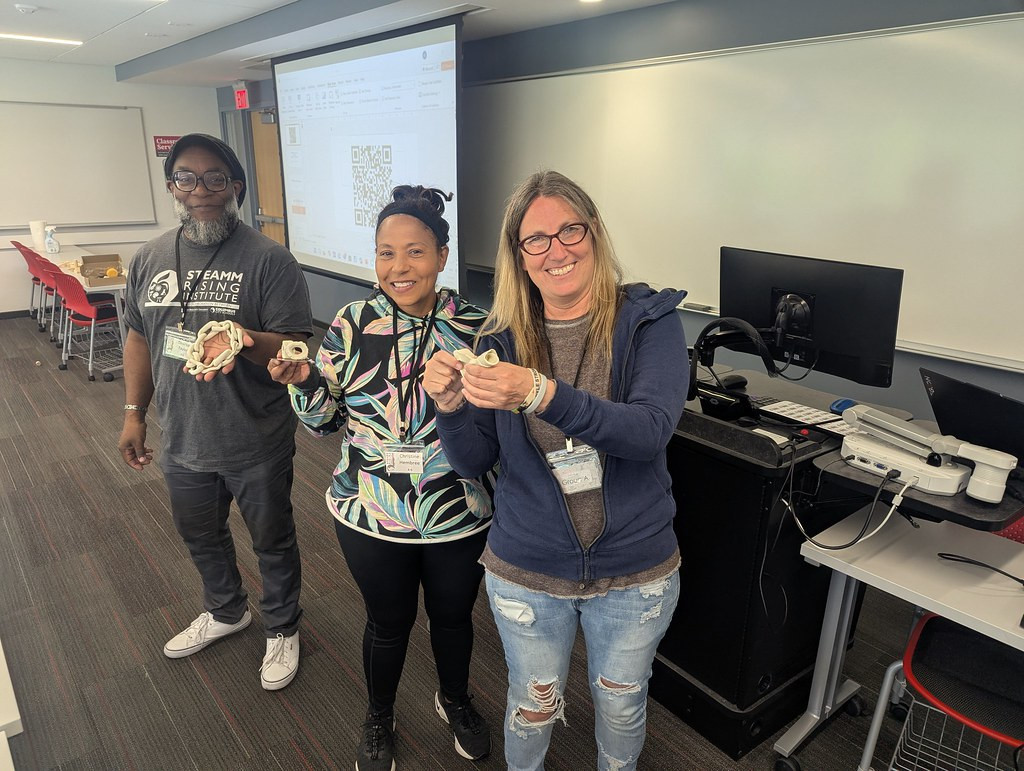
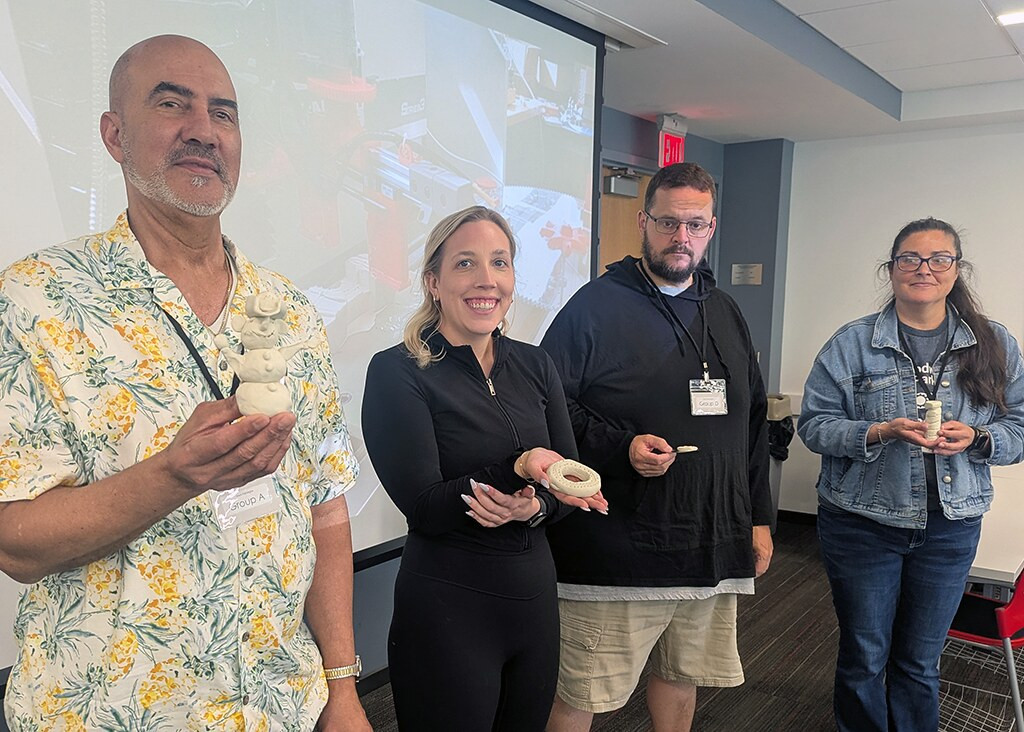
Summer break is a dichotomy for educators. As students soak in the respite, teachers shift into preparation mode. Earlier this month, a cohort of 100 K-12 teachers from around the greater Columbus area spent a few days on the Columbus campus of The Ohio State University in an immersive learning experience that will transfer to their classrooms this fall.
STEAMM Rising Summer Institute is an initiative among the city of Columbus, Columbus City Schools, Columbus State Community College and Ohio State to cultivate and refine curricula in science, technology, engineering, art, mathematics and medicine (STEAMM). The purpose is to align educational progression with career readiness in STEAMM fields for students in grades K-12.
 The Bureau of Labor Statistics projects that employment in STEM occupations will grow “at twice the rate (10.8%) of overall employment (5.3%) through 2031.” Ohio is one of the most fertile markets for job seekers with a background in STEM given the nearly $54 billion backing by seven tech giants that are developing operations in central Ohio – Cologix, Amazon, Intel, Google, Vantage Data Centers, Microsoft and DBT Data.
The central Ohio tech boom requires a skilled workforce commensurate with the growth. Pathways for these individuals, which begin in elementary school, are being paved by the curricula that gives them the best advantage at success in the Midwest’s tech heartland.
“One of the major challenges with workforce development is reaching students at key points in their lives and encouraging them to pursue new lines of learning. When teachers bring manufacturing into their classrooms, they introduce students to new career pathways that they may have otherwise never known,” said Samantha Trzinski, director of education outreach & workforce development with the U.S. National Science Foundation HAMMER-ERC based at Ohio State.
Part of the multiday event at Ohio State exposed Columbus teachers to STEAMM-focused experiences scalable to their classrooms. Interactive experiences were presented by the College of Nursing, the Department of Materials Science and Engineering (MSE), the Center for Cognitive and Behavioral Brain Imaging, the Sustainability Institute, the Department of Food Science and Technology, the Department of Anthropology and the College of Pharmacy.
MSE hosted a tour stop at Mars G. Fontana Laboratories, a 124,000-square-foot engineering complex that opened in 2020. Professor Elvin Beach and Laboratory Supervisor Pete Fallon led Columbus City Schools instructors through a tension demo in the material testing lab using MTS Universal Testing machines.
Each group tested three samples: low density polyethylene, high density polyethylene and 7075 aircraft-grade aluminum. They loaded samples, entered the test parameters, and ran the tension tests to failure.
“The three materials gave them a wide range of results that facilitated conversations around material properties,” said Fallon.
The instructors considered how this lesson can be incorporated into a 10th grade physics lesson, a fifth grade math class and an 11th grade chemistry activity.
Another session was led by Alex Bandar, innovation ecosystem director with the U.S. NSF HAMMER-ERC, a partnership between the National Science Foundation and a host of academic and technical organizations led by Ohio State.
Bandar introduced hybrid manufacturing, which includes a suite of novel manufacturing systems developed by HAMMER-ERC as part of the organization’s role in revolutionizing American production. Systems like a CNC milling machine and drilling dynamometer are scalable to the classroom and hands-on STEM education.
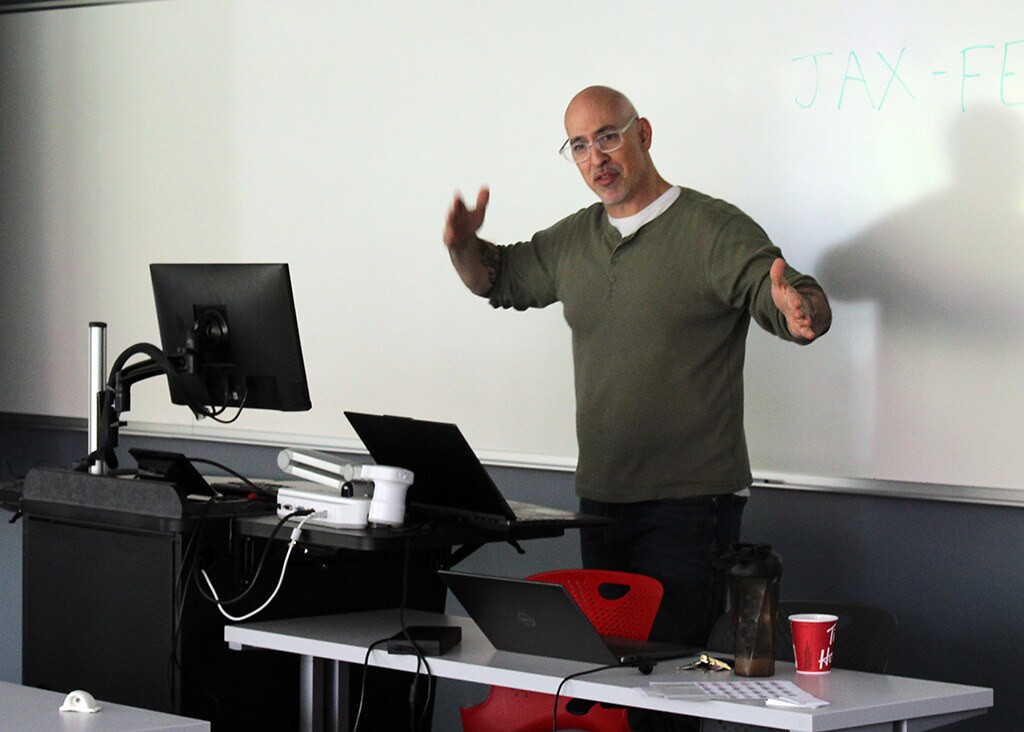 Bandar led Columbus City teachers through hands-on metal forging activities like punching tensile bars out of aluminum plates and using data from tensile testing, similar to Fallon’s exercise, to understand digital forging processes.
NSF HAMMER-ERC also piloted a Digital Simulation Training with 25 Career Tech Education (CTE) teachers. The six-hour session began with an introduction to materials science before HAMMER-ERC Program Director and MSE Professor Glenn Daehn featured content on the process of metal forming, which is the basis of a novel manufacturing technique developed by Daehn and a coalition of engineers called robotic blacksmithing.
CTE teachers used digital simulation software DEFORM FEM to forge metal and replicated physical metal forging through a modeling exercise. The training culminated with a demonstration that used machine vision to capture the 3D geometry of a forged part, a process analogous to operations embodied in Industry 4.0.
Exposing STEAMM to Columbus-area students throughout their formative years is a springboard to abundant and secure career options that are waiting for them within mere miles of their homes.
“Maybe these students will become materials scientists, engineers, metalworkers or manufacturers, and that is what makes outreach events like this one so important to NSF HAMMER-ERC’s mission,” said Trzinski.
The path to a successful career is lined with knowledgeable teachers and applied learning enabled by the STEAMM Rising Summer Institute and a supportive community network.
