

Students prioritize facts over partisanship to advance policy solutions
Understanding issues promotes civil discourse among peers

|
Joan Slattery Wall Ohio State News contributor |
One of Ella Magaw’s best friends leans to the opposite side of the political spectrum than she does, but she understands that neither of them can nor want to change the other’s mind.
“I’m trying to be more aware of thinking, ‘I’m not telling you this because I want to make you think the way I do,” said Magaw, a second-year student studying public management, leadership and policy at The Ohio State University’s John Glenn College of Public Affairs. “It’s just that people want to be heard and feel safe in their opinions. Obviously, that doesn’t apply to intolerance if someone’s being hateful, but civil discourse, if we think about it as hearing people out rather than trying to change opinions, it’s definitely the way to go about it.”
A pre-law student who expects to earn her Master of Public Administration in 2028, Magaw wants to work on Capitol Hill for the federal government or in state government.
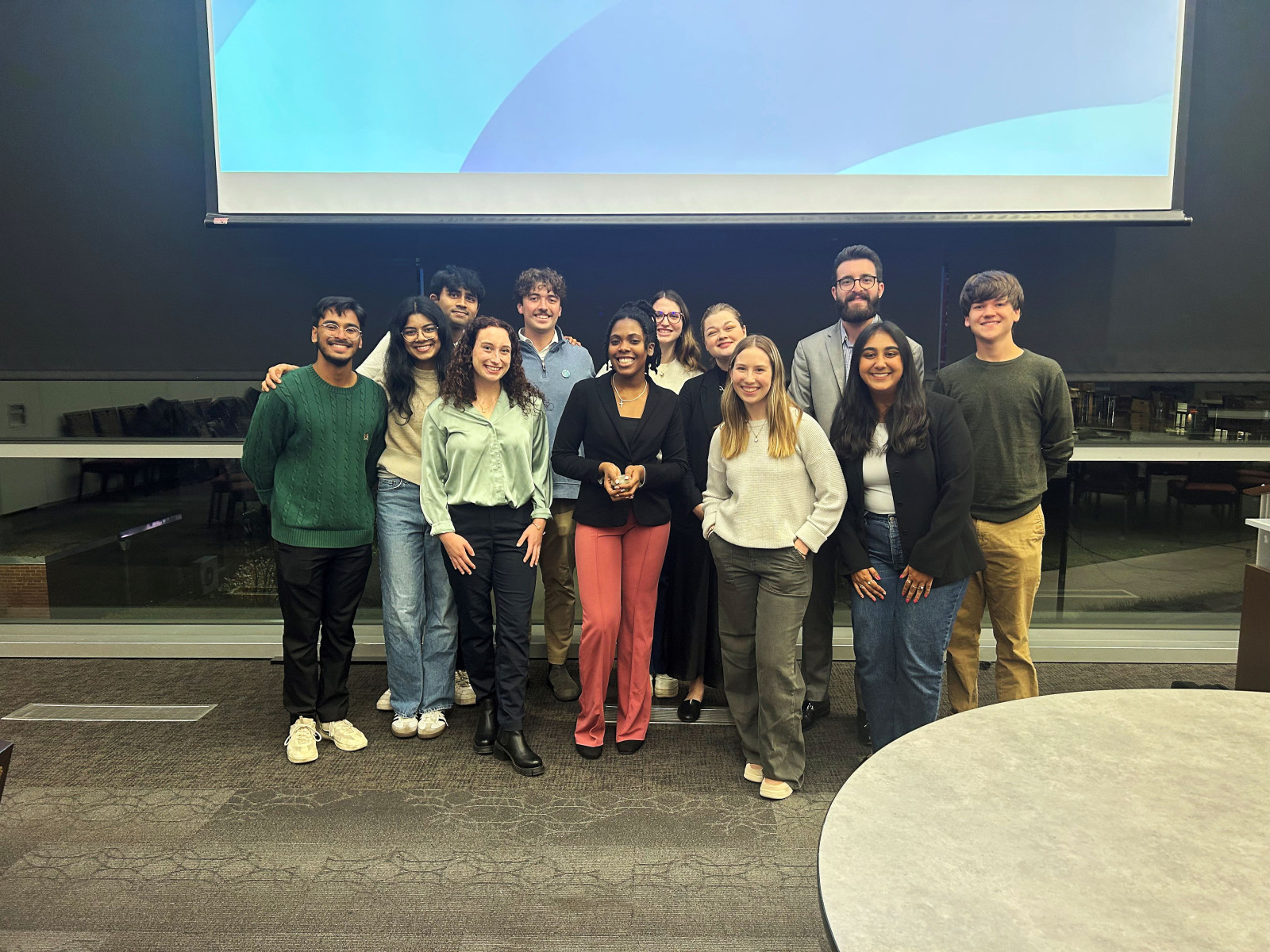
She and seven other Ohio State students are learning about civil discourse as ambassadors of a Washington, D.C.-based nonprofit, nonpartisan organization called Free the Facts. The initiative aims to empower young Americans to learn and lead by providing reliable, nonpartisan information about complex policy issues and teaching them skills they need to form their own opinions, advance policy solutions and meaningfully participate in the national debate about the country’s biggest challenges.
Ohio State also highlights civil discourse through its Listen. Learn. Discuss. initiative, which includes programs, coursework and resources that help Buckeyes productively share different perspectives, build trust with one another and clearly articulate their point of view.
“It’s uncomfortable having conversations with people not on the same side of the aisle or even having the same policy ideas as you, but it’s something that’s so important. Everything is in such a gridlock right now. Free the Facts feels like it’s laying the foundation for something to get done,” Magaw said.
Free the Facts doesn’t recommend policy solutions; instead, it explains the facts to students and encourages them to look into solutions themselves. An independent panel of researchers and policy experts, half Democrat and half Republican, helps students understand policy issues such as Social Security, the federal budget and Medicare.
“I’m not some 40-year-old policy wonk who hasn’t talked to a college kid in ages. I’m a college kid, and I’m interested in these issues,” said Alan Mathew, another Free the Facts ambassador and a fourth-year Glenn College student earning a BS in public policy analysis and economics, with a minor in statistics.
“For all of the different policy proposals that might be put out there for Social Security, there are a lot of things people don’t like, which is completely fair,” Mathew said. “But a lot of people don’t even know this is a conversation taking place. If more people were involved, wouldn’t it be interesting if we could find some more ideas across the aisle so we can keep the program going longer? People might disagree on what we should do, but they all agree on what the problem is.”
Magaw feels passionate about housing and policy that could solve related challenges.
“Everybody needs a place to live; that’s not a partisan thing. It’s how do we get there and how do we achieve that? I have my own policy opinions on it, but it would be nice if there was even a national recommendation that we aren’t doing enough about housing,” she said.
Housing also is a policy topic Mathew studies, knowing there isn’t one silver bullet solution. Free the Facts helps him look at the information and knowledge that’s building around the issue.
“Decisions are made by people who show up. Before you show up, you want to understand what you’re showing up for,” Mathew said. “If you show up with just your very specific view of the world, you’re going to butt heads with someone who doesn’t agree. If you’re not prepared for that, in the worst case no progress happens, but if you are prepared for that, you’re more likely to be able to build something for positive change.”
Magaw incorporates what she learns from Free the Facts with discussions in the John Glenn Civic Leadership living-learning community and with lessons in the classroom. In one, taught by instructor Joseph Henry, the students were assigned identities and instructed to approach a policy problem from the point of view of those identities.
“If you’re a CEO of a transnational organization, it’s very different than coming at it as a single mother. Even if it didn’t change anyone’s mind, it could still change the way they think,” she said. “It was an interesting way to rethink policy issues that you thought you had a strong stance on.”
