

The Big Table aims to strengthen Ohio State’s community bonds
Ohio Stadium event brings together students, faculty, staff

|
Chris Bournea Ohio State News |
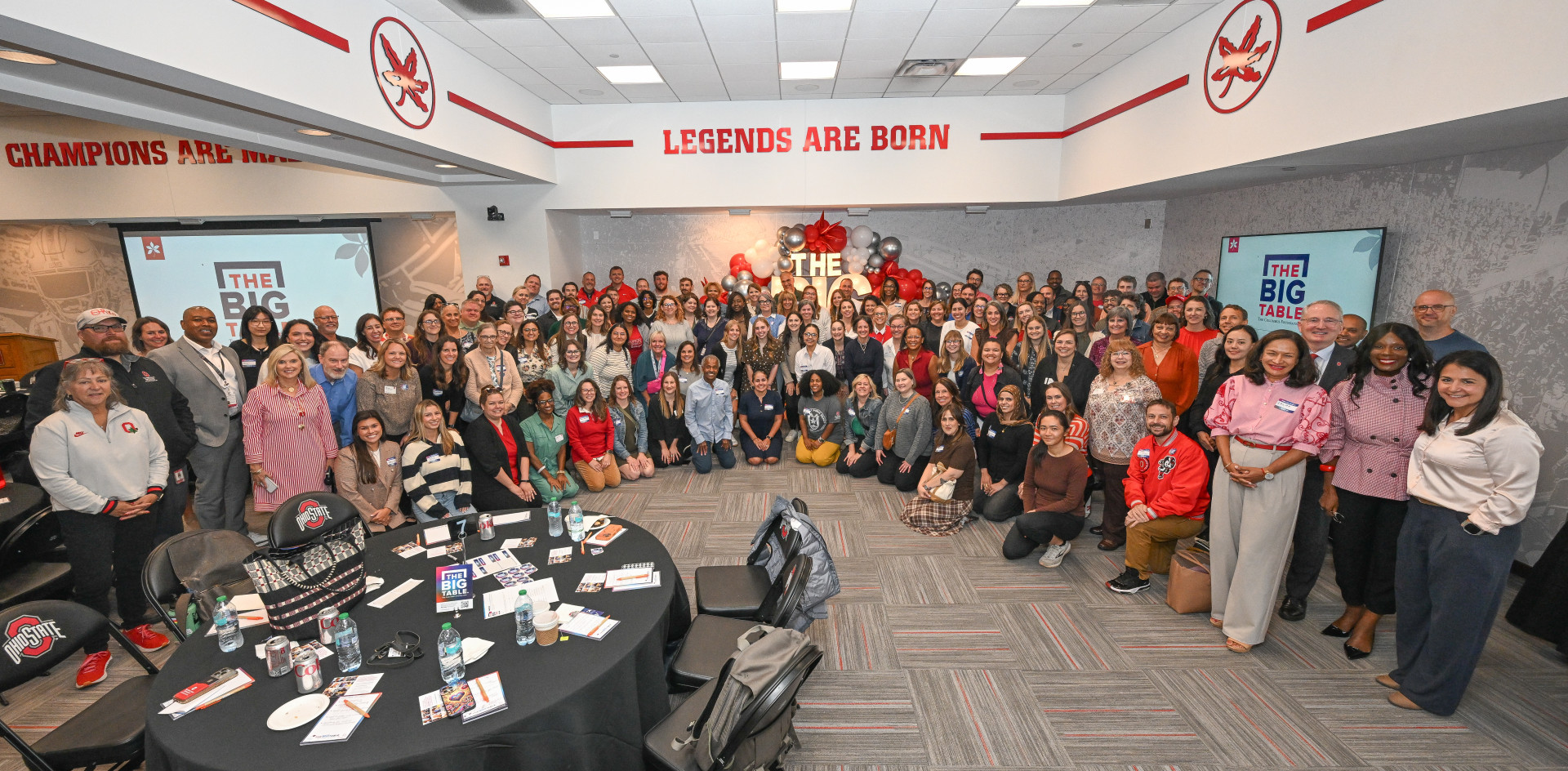
The Ohio State University Office of Student Life hosted The Big Table at The ’Shoe on Sept. 29 at Ohio Stadium to facilitate conversation among students, faculty, staff and community members.
Launched in 2016 by the Columbus Foundation, the Big Table is an annual community conversation held citywide in Columbus. Participants share stories about acts of kindness and discuss how to foster a sense of belonging throughout the community.
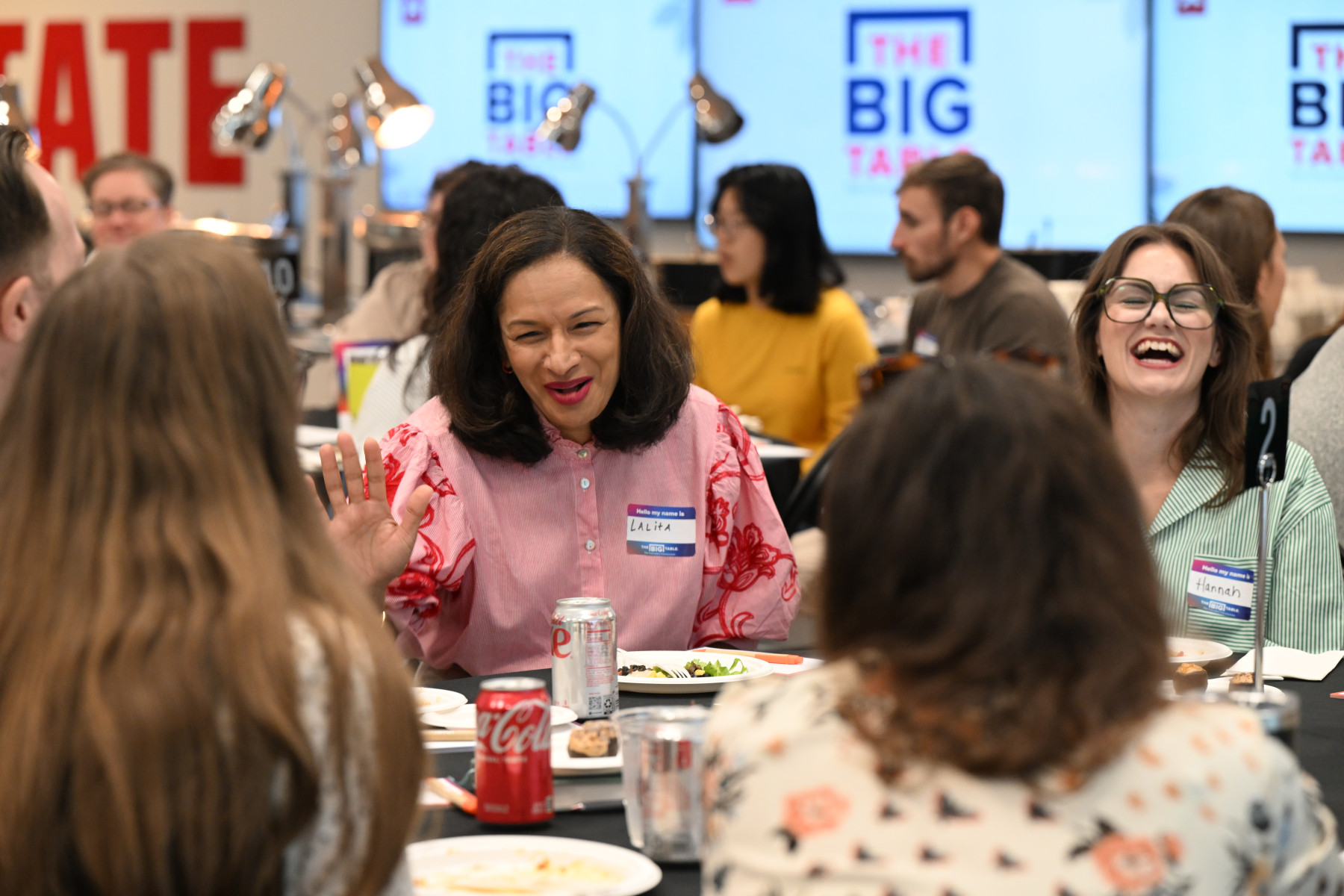
Among the participants at Ohio State’s gathering were the university’s first lady, Lalita Kaligotla, an associate professor in the College of Nursing and senior director for Leadership, Policy Engagement and Innovation. The event centered on the university’s Listen. Learn. Discuss. platform.
“Today there are over a hundred of these events happening around the city of Columbus. You are part of a movement that’s happening,” Tracy Stuck, assistant vice president of student life, told attendees. “The beauty of today is you have one goal, which is to meet someone you didn’t know when you walked in, and also it’s to listen and to be curious.”
Leading the discussion were Melissa Shivers, senior vice president of student life, and John Warner, executive vice president and chief executive officer of the Ohio State Wexner Medical Center.
During the event, participants gathered in small groups and shared responses to questions that Shivers and Warner posed. Participants shared anecdotes about people who have made a difference in their lives, spoke about experiences that brought them joy and reiterated statements from fellow attendees that made an impression.
Shivers said The Big Table supports Ohio State’s focus on promoting kindness.
“It’s about how do we interact and engage with one another?” she said. “Just last week at the university, we hosted a food packing event where we packed over 325,000 bags of food to send to southern Ohio.”
The Big Table also promotes hope, Warner said. He cited medical research indicating that hope can contribute to a patient’s emotional and physical well-being.
“There’s real science behind hope, integrating it into all that you do,” he said. “In fact, there are several large [clinical] trials of 25,000-plus patients followed over 14 or so years with either heart disease or cancer. And if they had a feeling of hope from the very first day they received the news of their diagnosis, they do much better. That’s important in all that we do.”
For more information about Listen. Learn. Discuss. and a calendar of upcoming events, visit the program’s website.
