

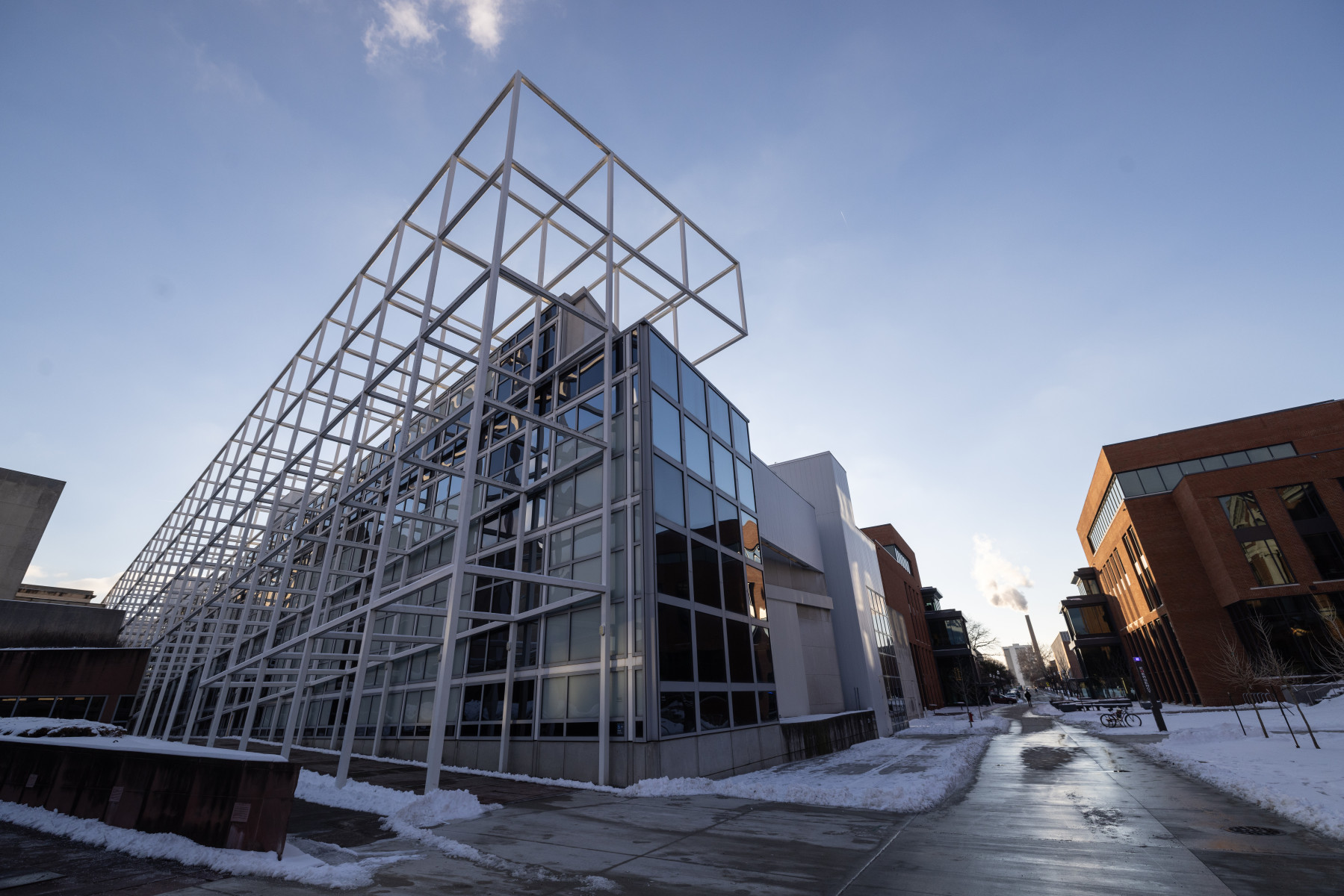
Wexner Center for the Arts names new exhibitions curator
Rebecca Lowery eager to engage with Wexner space

|
Franny Lazarus Ohio State News |
Rebecca Lowery hadn’t told anyone she’d accepted a new job in Columbus. While on a trip to Japan, she and her partner were seated next to a couple from Akron. What everyone did for work came up in conversation.
“I let it slip,” she said. “I told them we were moving to Columbus so I could work at the Wexner Center for the Arts. They were so happy and surprised.”
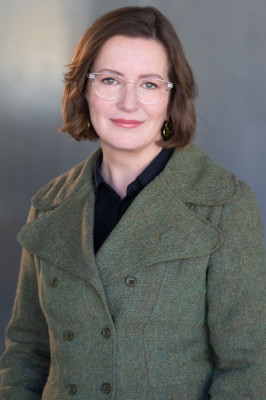
Lowery started her role as curator of exhibitions, which is now public knowledge, in February. After a career on both coasts, at institutions like the Metropolitan Museum of Art in New York and the Museum of Contemporary Art (MOCA) in Los Angeles, she’s excited to work at an art museum affiliated with a school – The Ohio State University.
“For years, when colleagues and friends asked what I saw for my professional future, I always talked about an art museum set within an academic community,” she said. “This has been the goal. I’m thrilled.”
“We are pleased to welcome Rebecca to the Wexner Center for the Arts,” said Gaëtane Verna, executive director. “Her enthusiasm for being part of a university-based, multidisciplinary arts center made her stand out. She will help us build on our track record as a laboratory for talent development, rooted in critical thinking and experimental practice. With her experience, talents, and skills, I have no doubt that she will contribute meaningfully to our role as an innovative forum for contemporary art and a vibrant cultural center for the community.”
The Wexner Center building is famously unusual in its design and layout. It won’t be Lowery’s first challenging exhibition space, however. MOCA, designed by Arata Isozaki, rivals Lowery’s new post, she said.
“The building was Isozaki’s first American commission and it is idiosyncratic,” she said. “It’s mostly underground. Some of the signature galleries are topped with beautiful glass pyramids. They can light up at night but that also meant natural light was getting into the galleries – and we know natural light is the enemy of many types of artworks.”
Lowery enjoyed the opportunities presented by Isozaki’s work and is eager to put her knowledge to the test in Columbus.
“The key is to figure out what fits the building,” she said. “The building asserts itself in a way that the Wexner Center also does. It requires you to respond to it.”
Lowery’s previous work has given her less tangible insights as well. Each institution has its own culture, she said. That culture develops entirely from the employees.
“What I see now at the Wex, looking at it through this lens, is a team that is actively working to build a lasting positive work culture,” she said. “It’s hugely important. When things break down, you can’t do the work you want to do. And the work is what you’re there to do, together.”
She hopes that her work can involve academic departments within the university more directly.
“The Wex has been a leading art institution for years and years but has maybe not always been fully embedded in the fabric of the university,” she said. “We have a strong desire to be part of this community, to assert our shared Ohio State spirit.”
While that of course means collaborating with university art departments, Lowery is thinking beyond that.
“I looked into programs across the university and considered who could be thought collaborators,” she said. “What kind of artists, what kind of subject matter could lend itself to connections across the university? That could be anything from the Department of History to the Byrd Polar and Climate Research Center.”
Lowery’s interest in the arts began when she was young and was accelerated in college, but she knows that not everyone shares her interest.
“I think art can be for everyone, but it doesn’t have to be everyone’s cup of tea,” she said. “Some people don’t enjoy reading novels or going to see live theater. It’s perfectly fine to like some things and not to like others. You don’t need a reason. Plenty of us in this field have art we don’t particularly like.”
It’s the people who say they don’t understand art that Lowery wants to reach.
“That’s where you can have an interesting conversation,” she said. “I’m a big believer, as are my colleagues, in making sure that your exhibition aids – labels, signs, explanations – are legible, that they don’t use a lot of art jargon. And if that’s necessary, then we explain it. It is possible for things to be accessible to the general public while maintaining full respect and appreciation for the artists and the artworks.”
While labels and signs are the museum’s responsibility, inquisitiveness comes entirely from the visitor – and is just as important, Lowery said.
“One way to understand contemporary art is as a series of conversations among artists,” she said. “If you’re coming in without that prior knowledge, there could be some nuances you’re not catching. But the work can meet you where you are. A sense of curiosity goes a long way.”
Lowery is keen to make the Wexner Center exhibitions welcoming. Artists share so much of themselves in their work, she said. She’s thrilled to help the public access it.
“The art is bringing people together, stimulating thought and curiosity, interest and conversation. What could be more vital than that?”
