

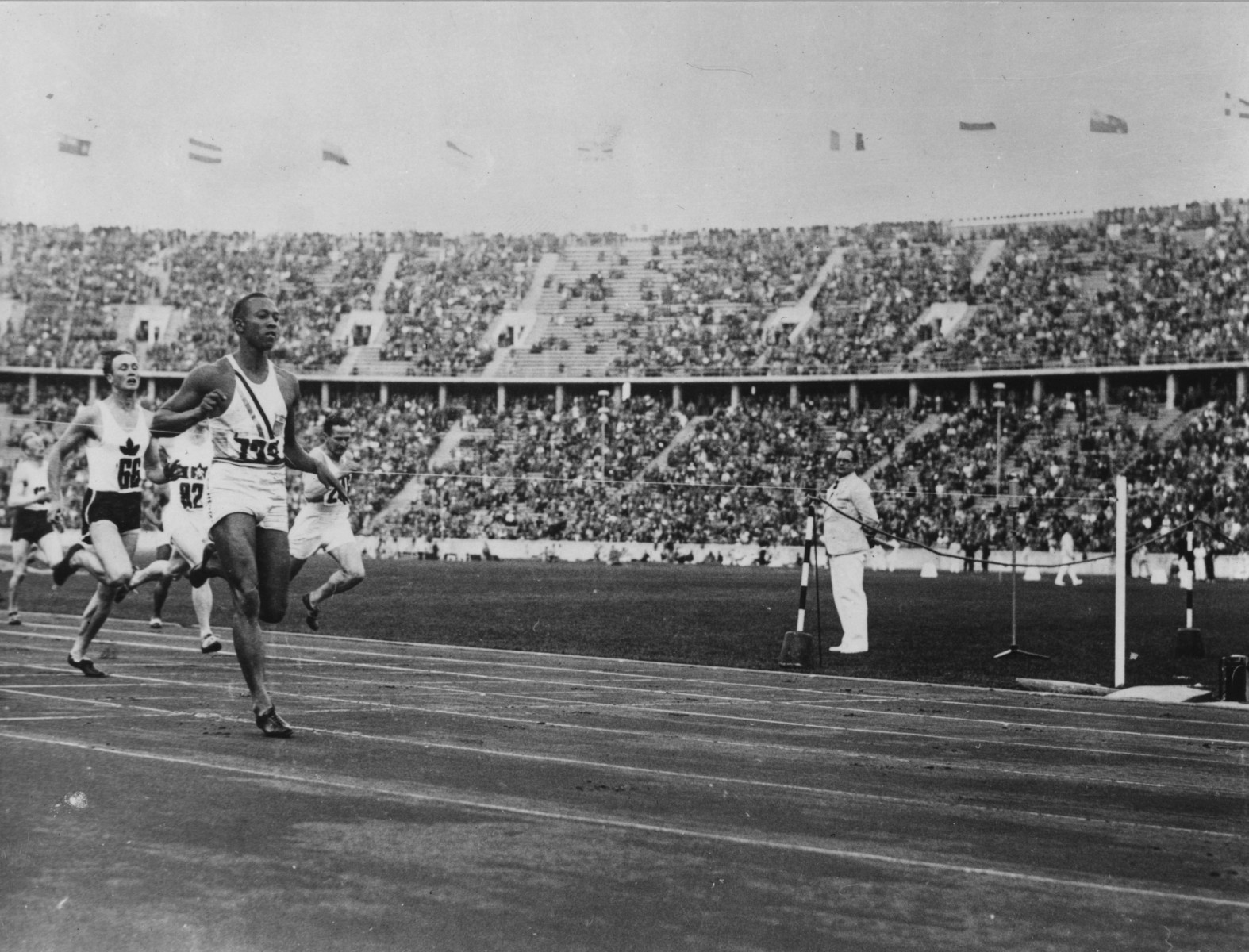
Event observes 90th anniversary of Buckeyes track legend Jesse Owens’ Olympic victories
Owens’ grandchildren, Ohio State representatives reflect on his enduring legacy

|
Chris Bournea Ohio State News |
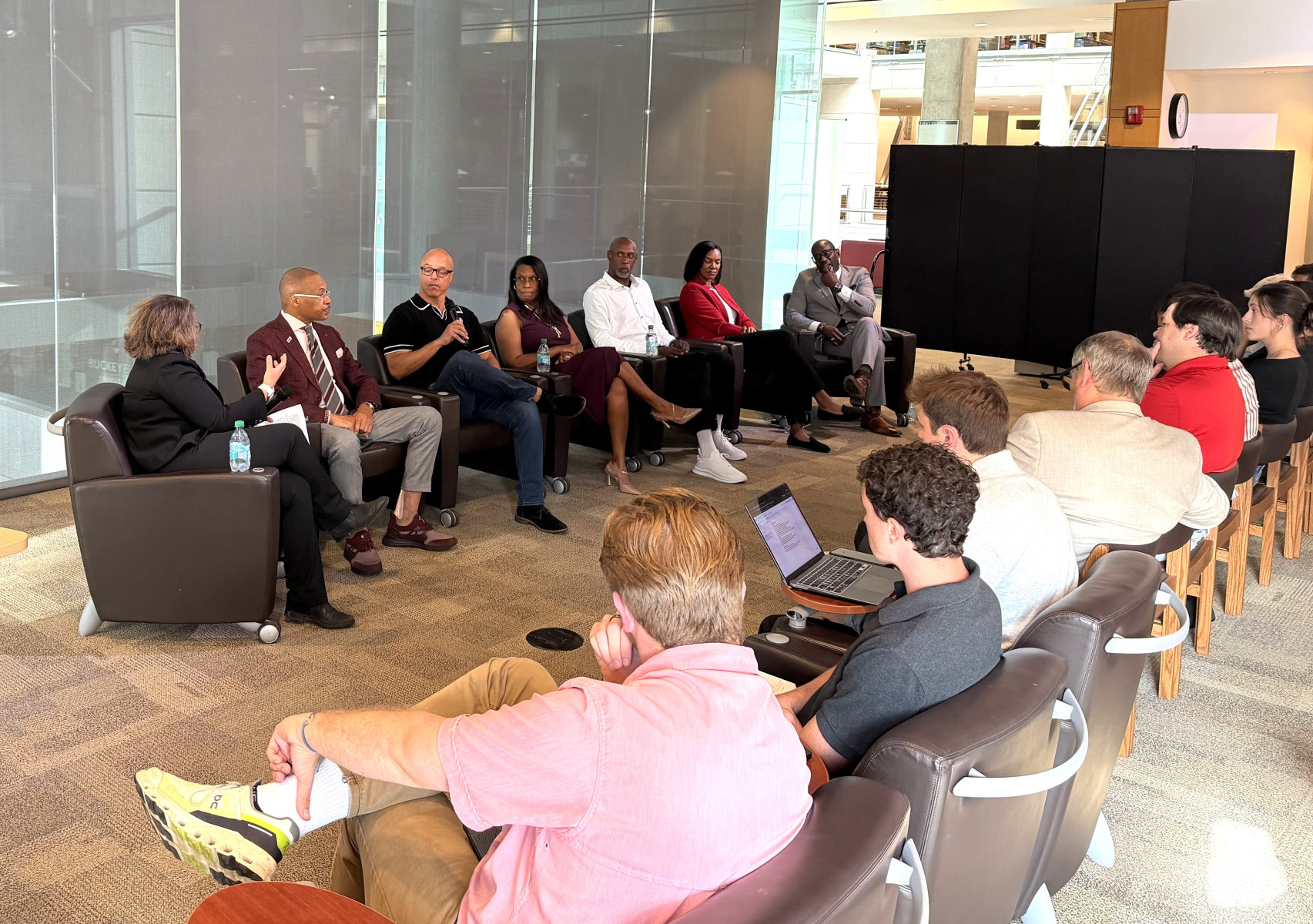
In honor of the 90th anniversary of legendary Buckeyes track athlete Jesse Owens’ 1936 Olympic triumphs, Owens’ descendants and university representatives participated in a recent panel discussion about his place in history.
The Ohio State University’s Sports and Society Institute hosted the event at Thompson Library in partnership with America 250-Ohio State and Ohio State Libraries.
In the 1936 collegiate track season, Owens was undefeated in 42 events for Ohio State. At that year’s Olympics in Nazi-controlled Berlin, Owens won gold medals in the 100-meter dash, 200-meter dash, broad jump, and as a member of the 4x100-meter relay team.
Although Owens didn’t graduate from Ohio State, the university awarded him an honorary doctorate of athletic arts in 1972.
“There’s no one who has had more of an impact from a sports perspective on this country that touches Ohio State than Jesse Owens,” said Nicole Kraft, professor of journalism practice and director of the Sports and Society Institute. “The privilege of having Jesse Owens as part of our family and part of the legacy that we share at Ohio State is really extraordinary.”
The panel discussion featured Owens’ grandchildren Stuart Owens Rankin and Marlene Hemphill Dortch, a graduate of Ohio State’s Moritz College of Law.
Owens Rankin said when people find out he’s related to the track legend, he’s taken aback by the reverence that people of all backgrounds express for his grandfather.
“It is heartening and it fills you with pride to see people’s reactions and their astonishment and awe,” he said. “Ninety years later, his accomplishments still holding the impact that they have on people is pretty special.”
Hemphill Dortch said she enjoys talking about her grandfather’s legacy, but he also taught her and her family to take pride in their own achievements.
By interacting with people who express curiosity about her grandfather, “it really gives other people the opportunity to learn more about him and also to share their stories and experiences,” she said.
“I think it is a testament to how we were raised, is that we are proud of his accomplishments, but those were his accomplishments. ‘So what are you going to do?’ And I think that’s what we live by: He is an inspiration for us to be of service.”
The panel also featured 1988 Olympic track gold medalist Butch Reynolds, an Ohio State alumnus; Rosalind Joseph, director and head coach of Ohio State’s track and field and cross country programs; Fox Sports anchor Gus Johnson; and Kevin Jones, author of “Jesse Owens: A Life in American History.”
Reynolds said Owens’ legacy influenced his decision to attend Ohio State. The young athlete saw Owens as a role model for overcoming obstacles.
“I said, ‘You know what? I’m going to go to Ohio State because I know that Jesse Owens came here,’” he said. “I know that he won four gold medals, so I know he can endure [challenges] through the tradition of The Ohio State University. I said, ‘I can come here because I’m going to be good. I’m going to be strong.’”
Joseph said many young Buckeye track athletes are eager to carry on Owens’ tradition of excellence.
“It’s always nice to hear when they get to campus, the knowledge that they have for Jesse Owens,” she said.
“If you’re a track and field athlete, you don’t know Jesse Owens because you’re a track and field athlete. You know him because of his impact, not only in sports, but in his legacy across the world. There’s a lot of affinity for student athletes who want to come here and be a part of that.”
Prior to the panel discussion, Kraft and John Davidson, Ohio State’s faculty representative with the Athletics Department, discussed the historical significance of Owens winning four gold medals in Germany on the brink of World War II.
Owens’ place in history has not only been cemented at Ohio State with facilities such as the Jesse Owens Memorial Stadium, but also in Berlin, Davidson said. The city named a road after him, Jesse Owens Way, near the historic Olympic stadium.
“I think the reception of the crowd, the public broadly, was actually fairly welcoming” when Owens made history at the Olympics, Davidson said. “Jesse Owens is revered.”
