

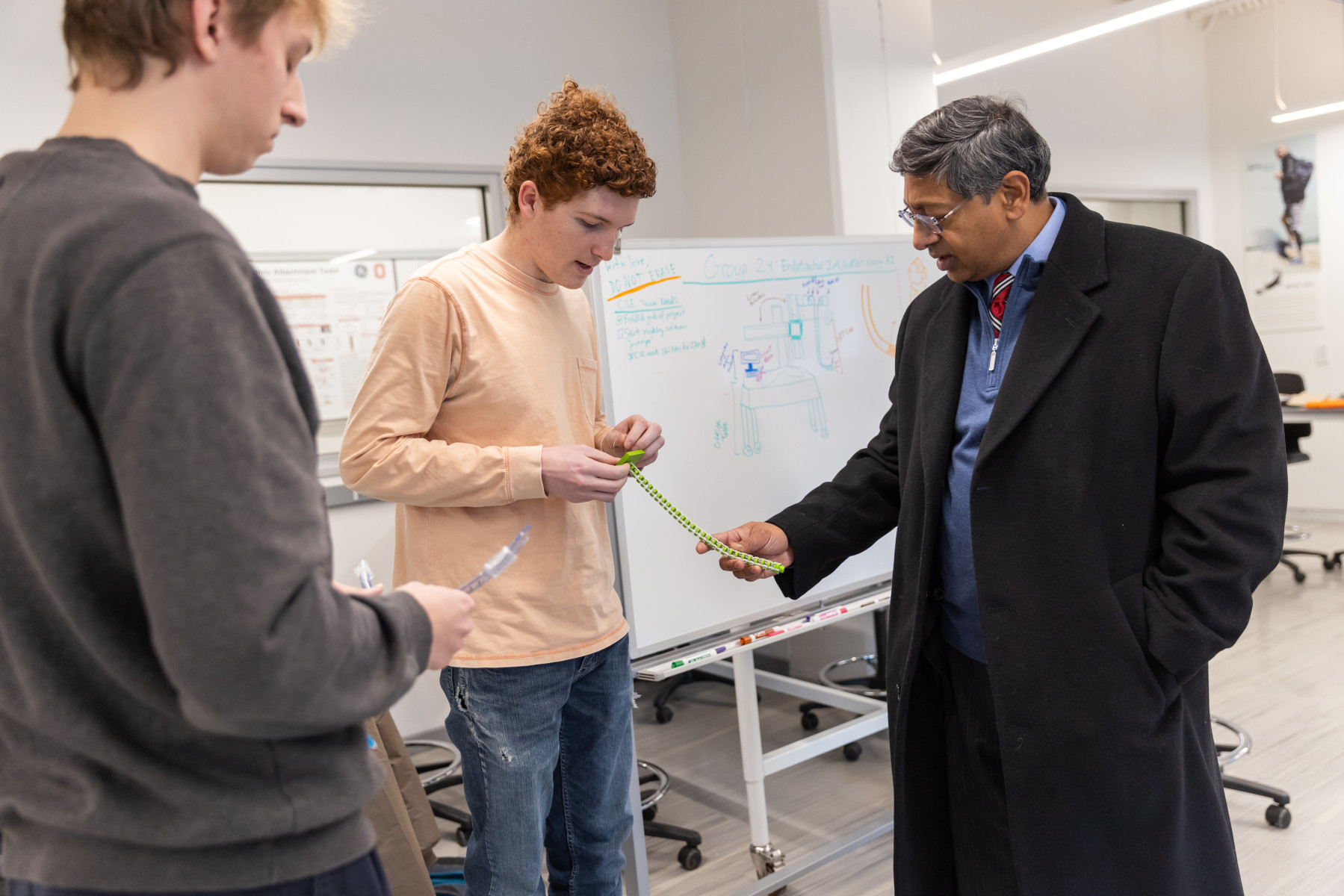
Ohio State’s new provost: University is ‘the school for the whole state’
Ravi Bellamkonda thrilled to be back in Ohio

|
Franny Lazarus Ohio State News |
It has been more than 20 years since Ravi Bellamkonda lived in Ohio. He began his professional career at Cleveland’s Case Western Reserve University. The weather, he said, is taking some getting used to.
“It’s cold!” he said. “I’m just not used to it. I’ve been in the South for so long now.”
Bellamkonda left Emory University to become The Ohio State University’s executive vice president and provost in January. While he may miss the heat of Georgia, he’s found a good replacement for it in Columbus.
“The warmth and friendliness of the people remains the same,” he said. “I remember it now. It comes back to you. People are genuine when they ask you how you are. It’s not one of those cursory things. I think there’s genuine interest. That’s been wonderful.”
Part of that warm reception has come from President Walter “Ted” Carter Jr. From the beginning of the search for a new provost, Carter was clear about wanting someone who would complement his background, telling Ohio State’s student newspaper The Lantern that he does not “come from the classically trained academic hierarchy.”
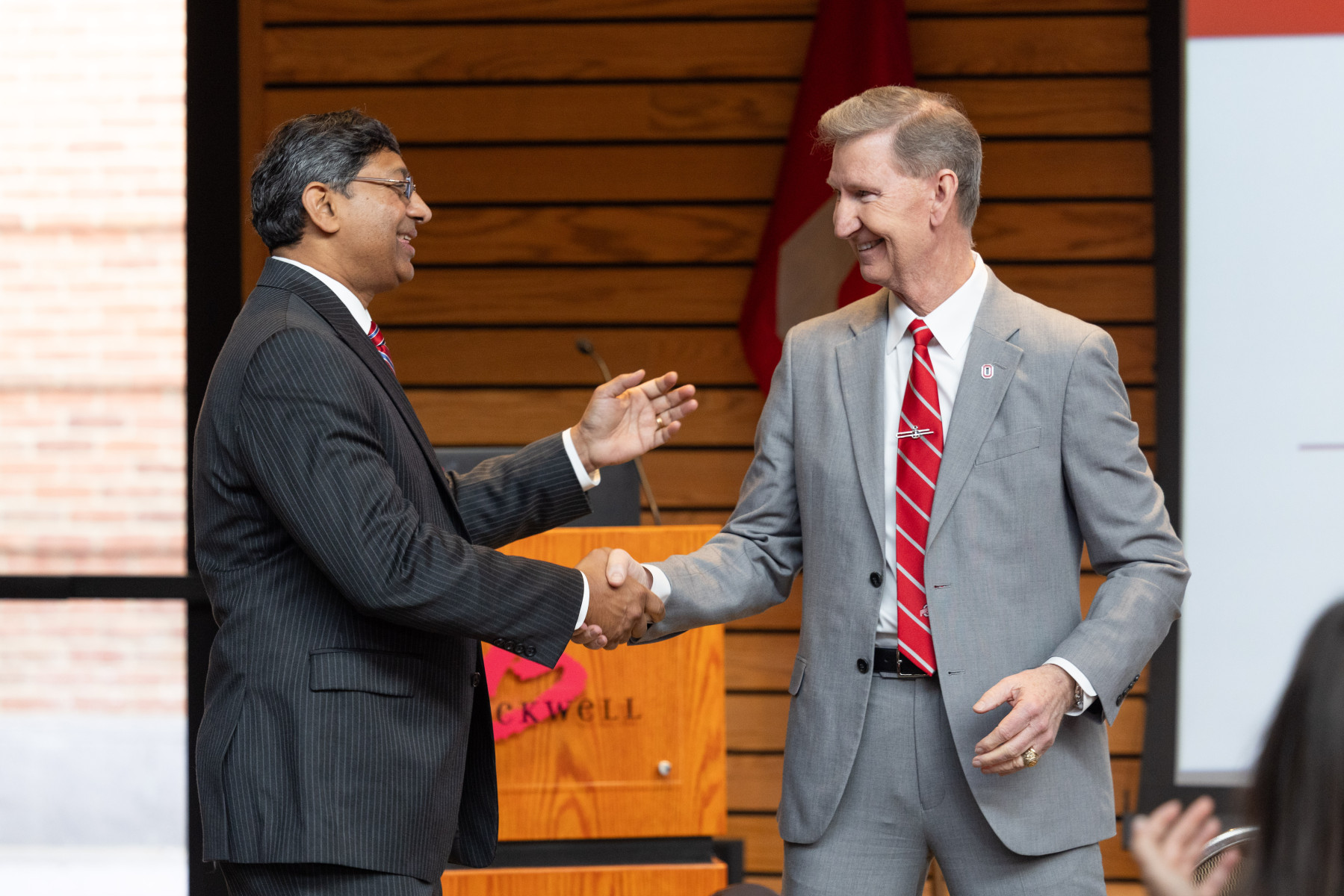
The pair hit it off immediately, Bellamkonda said, in part because of their commitment to higher education.
“What united us in our first conversations was a passionate feeling that higher ed is important to this country,” he said. “Institutions like Ohio State, in their mission to transform the lives of students of all socioeconomic backgrounds, they also transform those families’ lives. There’s a generational impact.”
Bellamkonda also thinks highly of Carter not just as a university leader, but as a whole person.
“He’s just a good human being. There’s the Top Gun pilot, the decorated veteran, the leader,” he said. “But deep down, what I saw was a person who likes to keep his word, who is measured in his thinking, who is not dogmatic. With all of those qualities, I felt like it would be my pleasure to work with someone like that and further Ohio State’s mission.”
That mission goes far beyond Columbus, Bellamkonda said. Ohio State will not be an ivory tower, inaccessible to most.
“I’d like us to be a porous university,” he said. “Porous in the sense of being open to our communities, to industry."
While he has goals for this work, he believes the university is already making great strides in community engagement.
 “Look at our Extension offices. John Warner at the Wexner Medical Center is thinking about the Appalachian region and how we can better serve it. We have a nursing school, a social work school, a dental school, all providing care in the community. We have research collaborations with India in addition to our Global Gateway offices in Brazil and China.”
While Bellamkonda’s background is in science, he made the arts and humanities a focus of his at Emory. There is room for both in a college education, he said, and the liberal arts are undervalued.
“There’s a misconception of what the liberal arts are,” he said. “Liberal arts are thought to be soft. In fact, it’s quite the opposite. They do a fantastic job with critical thinking, analytic rigor, communication skills – all necessary to be successful beyond your first job. These are valuable for your third, fourth and fifth jobs.”
A well-rounded education, with a foundation that includes the humanities, is key, he said.
“If you look at the problems in the world, they’re not technological problems,” he said. “They’re human problems. How are we organized as a society? What’s just? How do we make progress? What is progress? While technology can play a role in helping us solve these problems, the problems are human.”
Universities need to be as multifaceted as their students and the problems they seek to solve, he said.
“I’m so happy that Ohio State has a full spectrum of fields in one place. We’re not a technology university and we’re not a liberal arts university. We’re ‘and.’ As ‘and’ as humans are.”
That ‘and’ applies to burgeoning artificial intelligence (AI) fields as well.
“I’d like every student at Ohio State to be bilingual,” he said. “That is, to know AI tools and to know something else, whether it’s literature or physics.”
The breadth of what Ohio State offers students is just one of the things that drew Bellamkonda to Columbus.
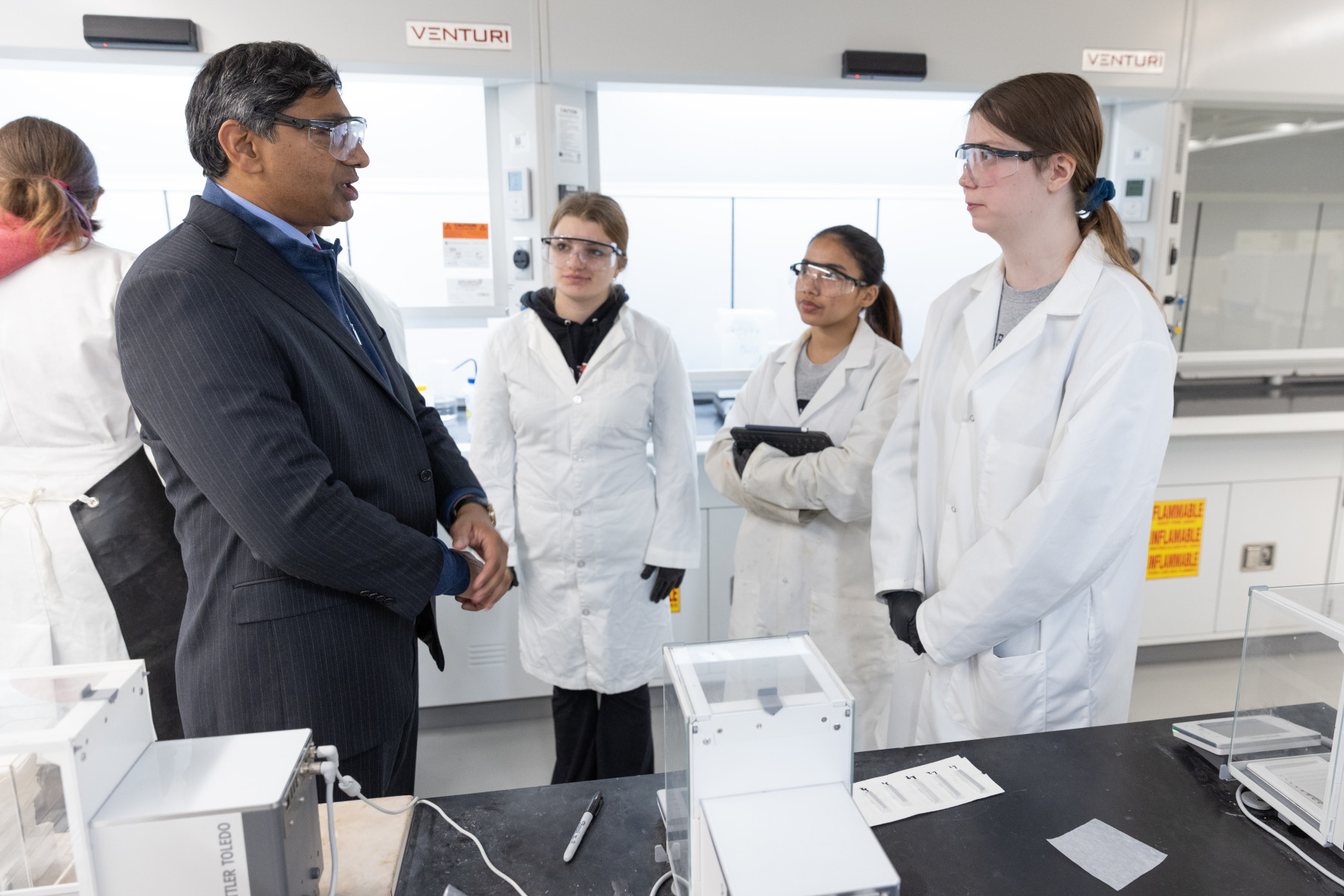
“The university is incredible, it’s a breathtaking place,” he said. “The scale of the things it takes on, from veterans to our Extension offices. The number of disciplines, the ambition and the scope. Our regional campuses. People say Ohio State is a state school. It feels like it’s the school for the whole state.”
Bellamkonda serves as the university’s senior-most academic leader. He meets with students frequently and is eager to hear about their experiences.
“I wish I could be in their shoes. It’s an amazing journey ahead,” he said. “But it’s one filled with a lot of anxiety.”
As an internationally renowned biomedical researcher who holds 11 U.S. patents, he is familiar with a common student concern: Am I smart enough?
A college acceptance requires so much focus and then students are asked to explore a variety of subjects. It can be overwhelming. And it’s easy to compare yourselves to classmates, he said. Try to avoid that trap. Someone will always be smarter.
“Really successful people in life have to be smart enough to do what they need to do,” he said. “Beyond that, how much smarter doesn’t matter. Other things matter. Are you a decent human being? Do you work hard? Do you stand up when you face a setback? Are you resilient?”
You’re smart enough, he said.
“Otherwise, you wouldn’t be here.”
